Camp AsimovCAMP ASIMOV

3-Week Robotics Engineering Program

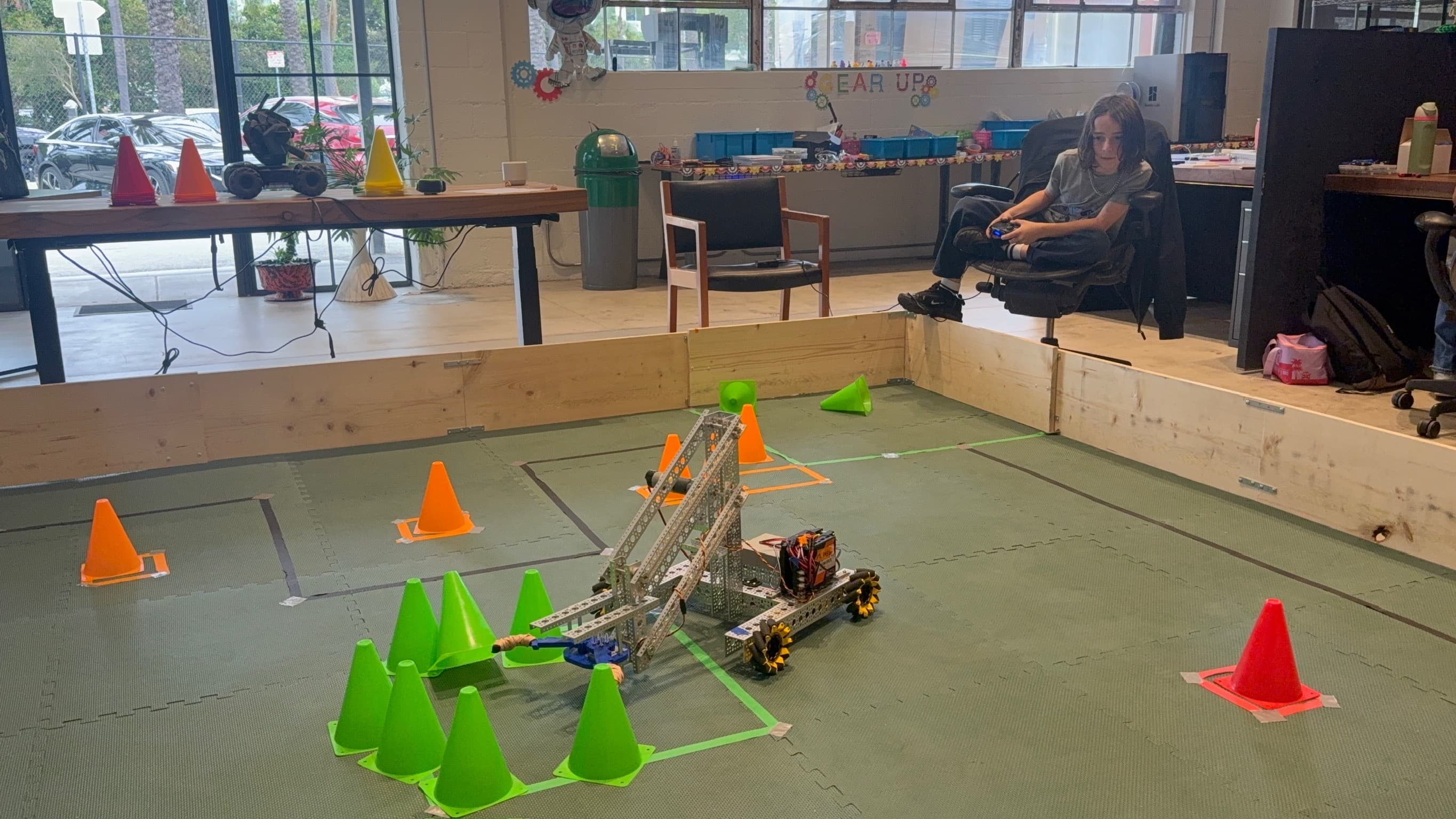
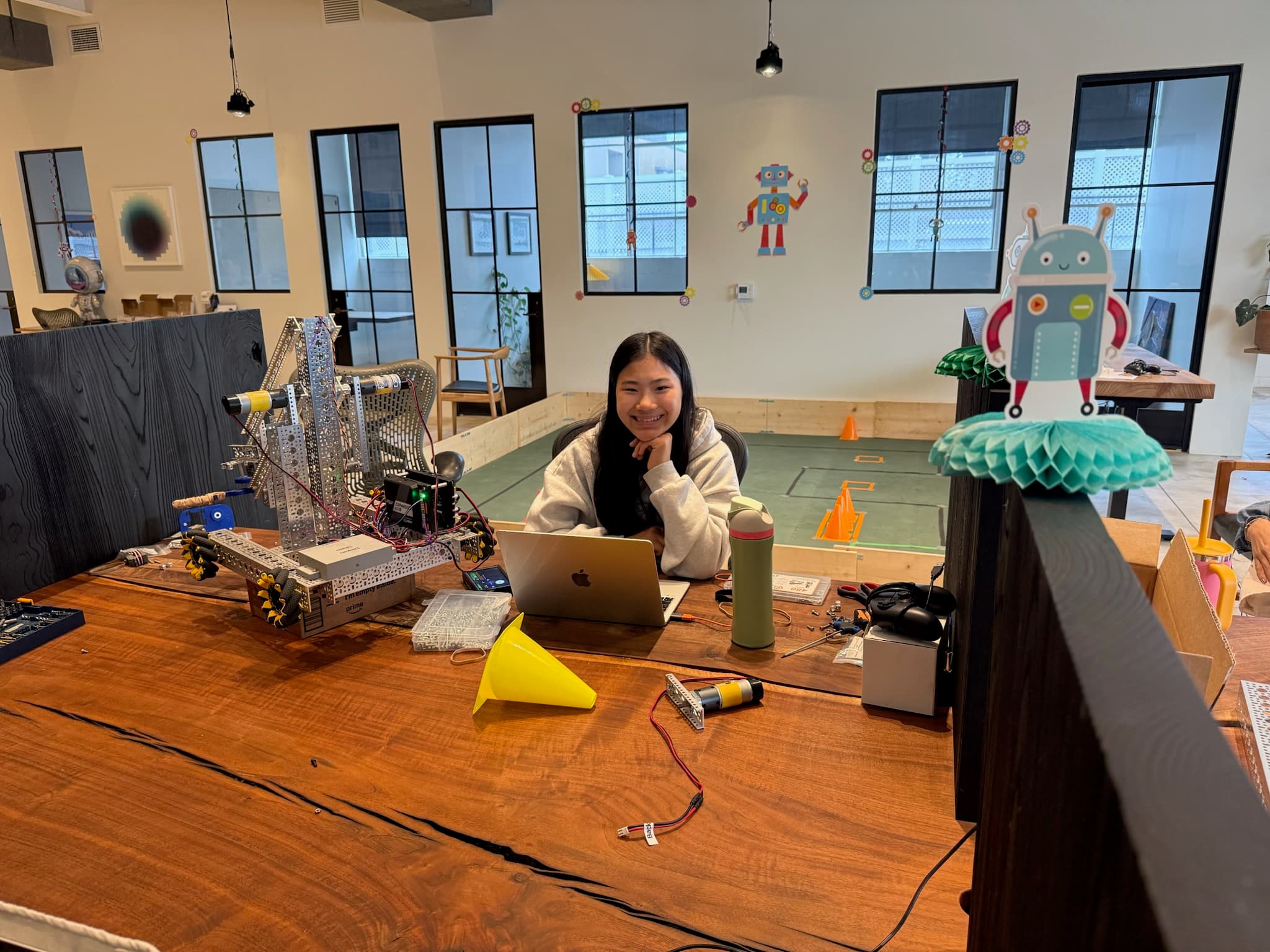
This is a focused three-week robotics engineering program where students spend each day designing, building, wiring, programming, testing, and improving their own robot. Students learn by taking direct responsibility for their work, finding problems, and improving the robot step by step.

Students of all experience levels are welcome. On the first day, students are assessed in building, CAD (3D design software), and programming so instruction can be adjusted to the right challenge level.

Week 1: Design, Making Custom Parts, and Rapid Prototyping

Students build the foundation on their own robot by moving from concept to a first working prototype they can test and improve.

Focus Areas
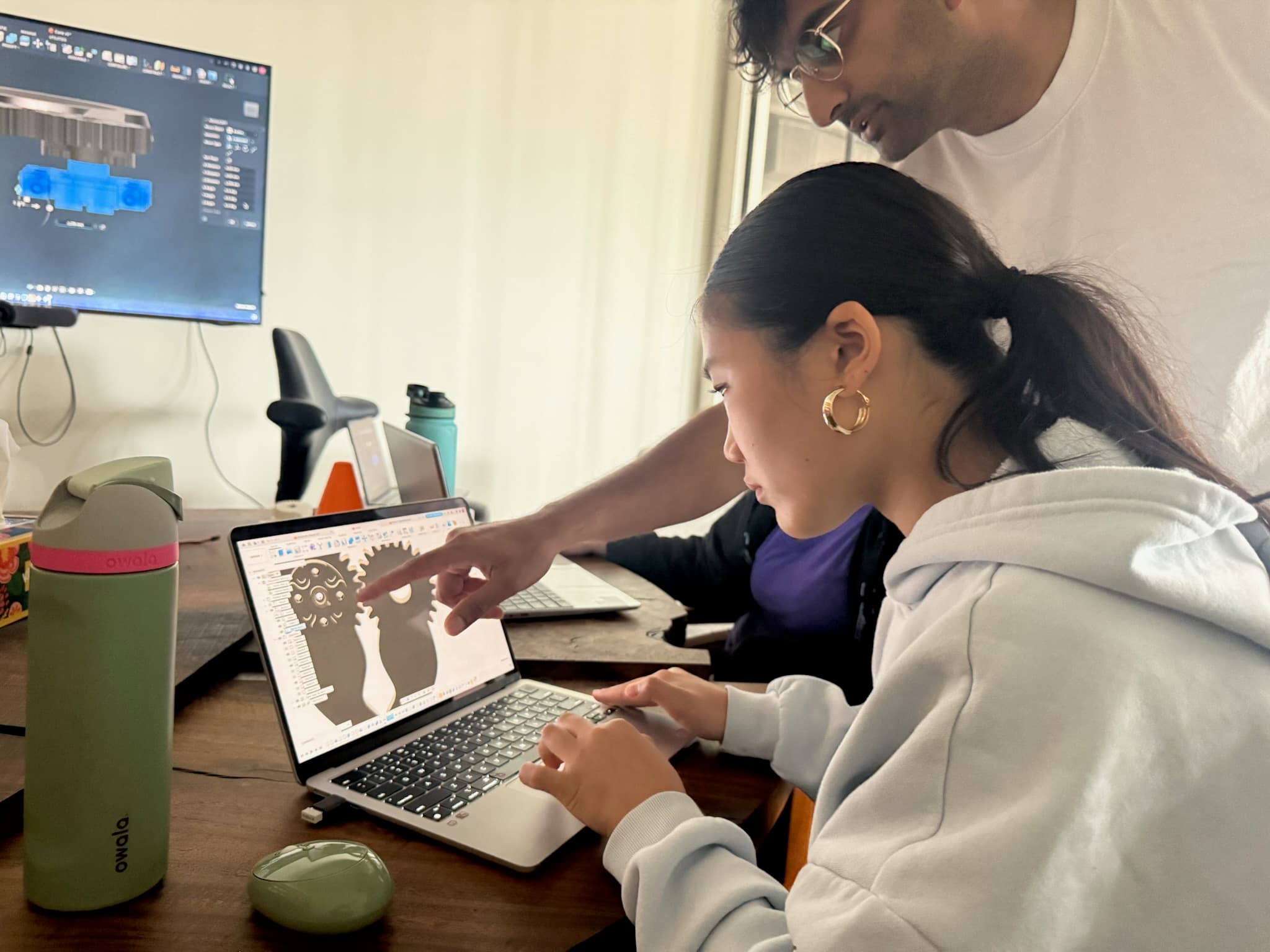
  • CAD (3D design software) with Autodesk Fusion 360
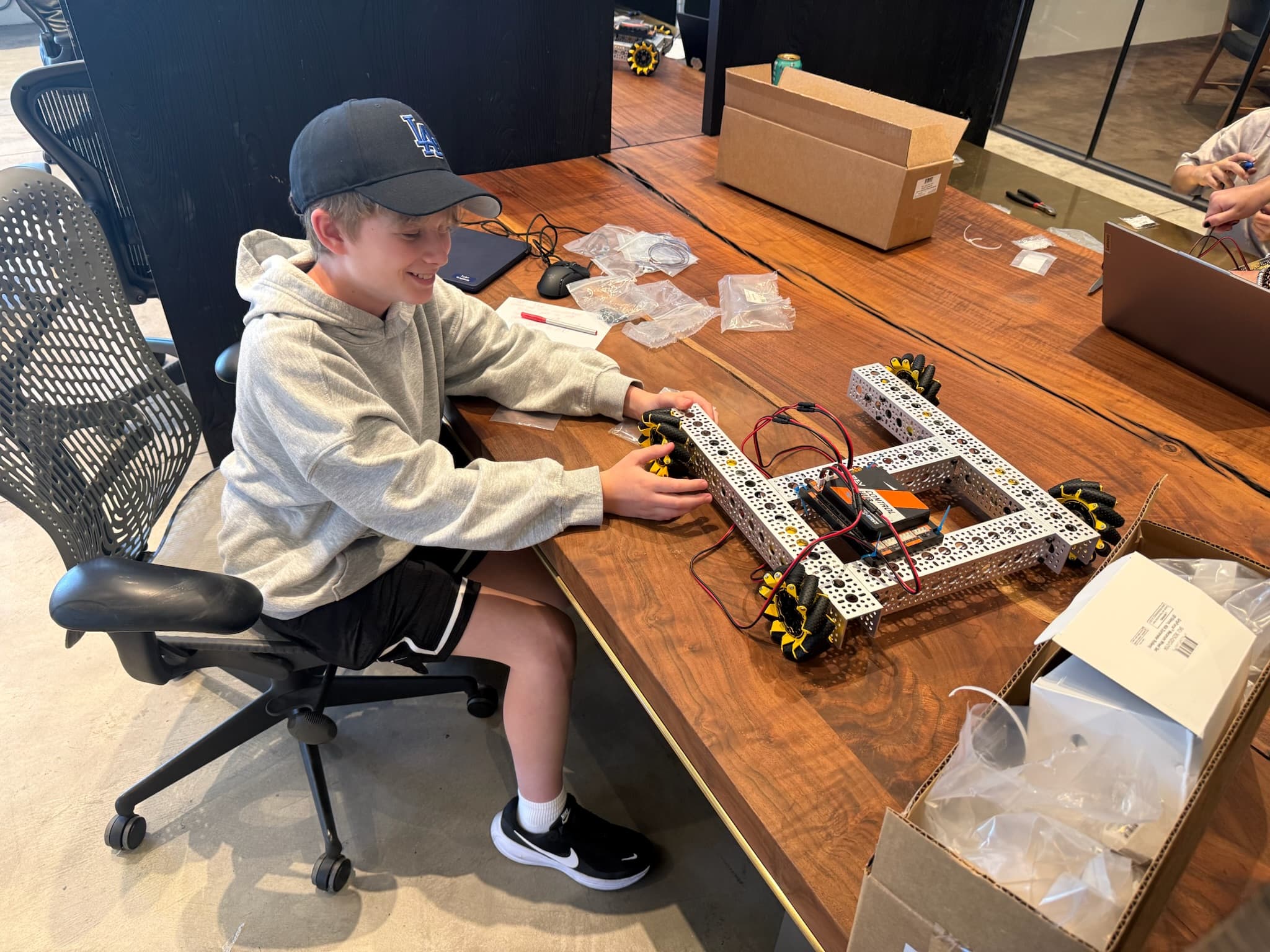
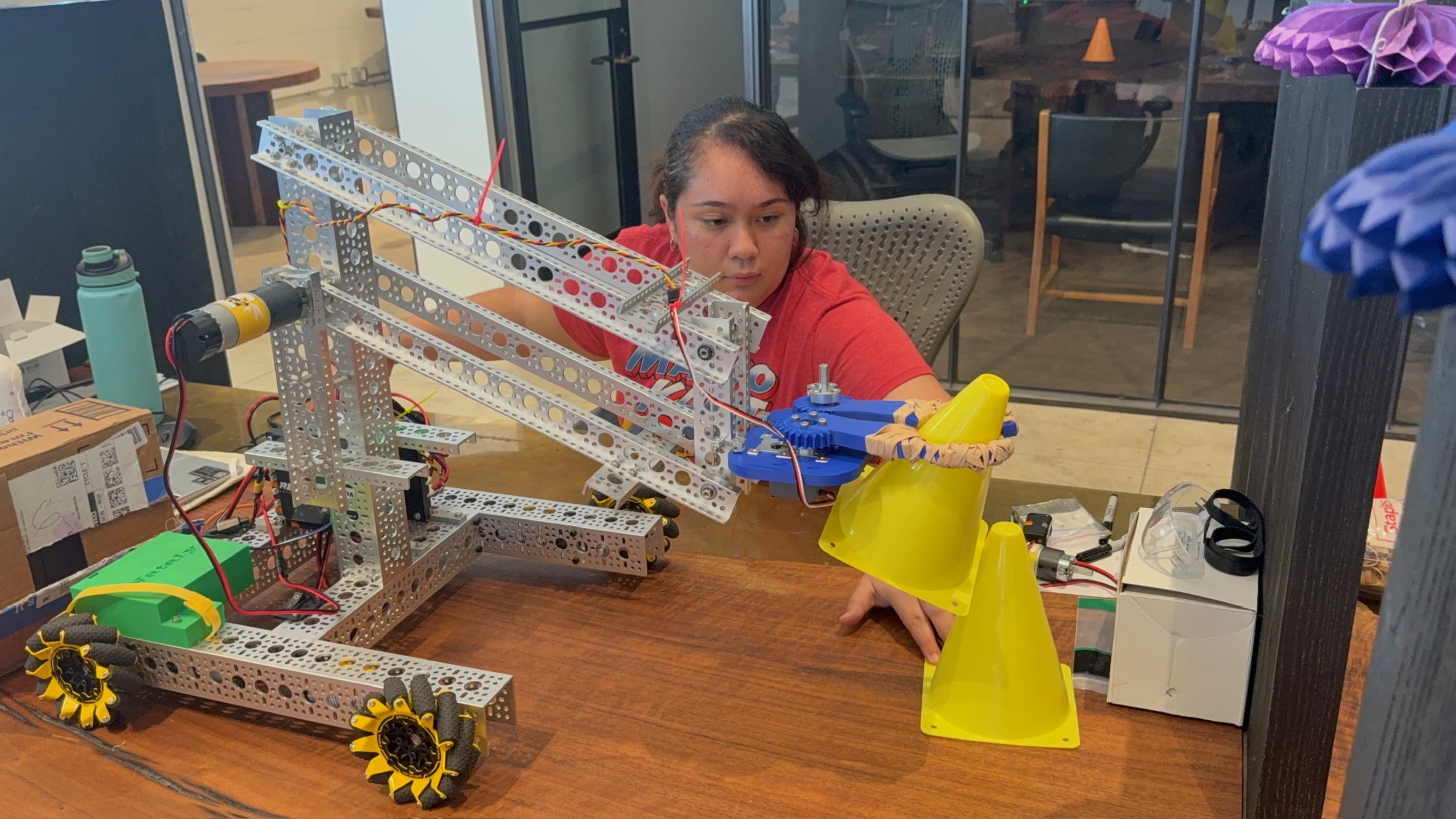
  • Drivetrain work (the system that helps the robot move), intakes, and linkages using REV + goBilda parts
  • Testing, feedback, and redesign cycles
  • Safe lab operation & tool certification
Outcomes
  • Early prototypes completed
  • Fusion files & sketches saved
  • Understanding mechanical trade-offs
  • Confident, safe shop habits

Week 2: Code, Control Systems & Sensor Integration

Students connect their hardware to reliable software behavior by learning how code and electronics control movement and response.

Focus Areas
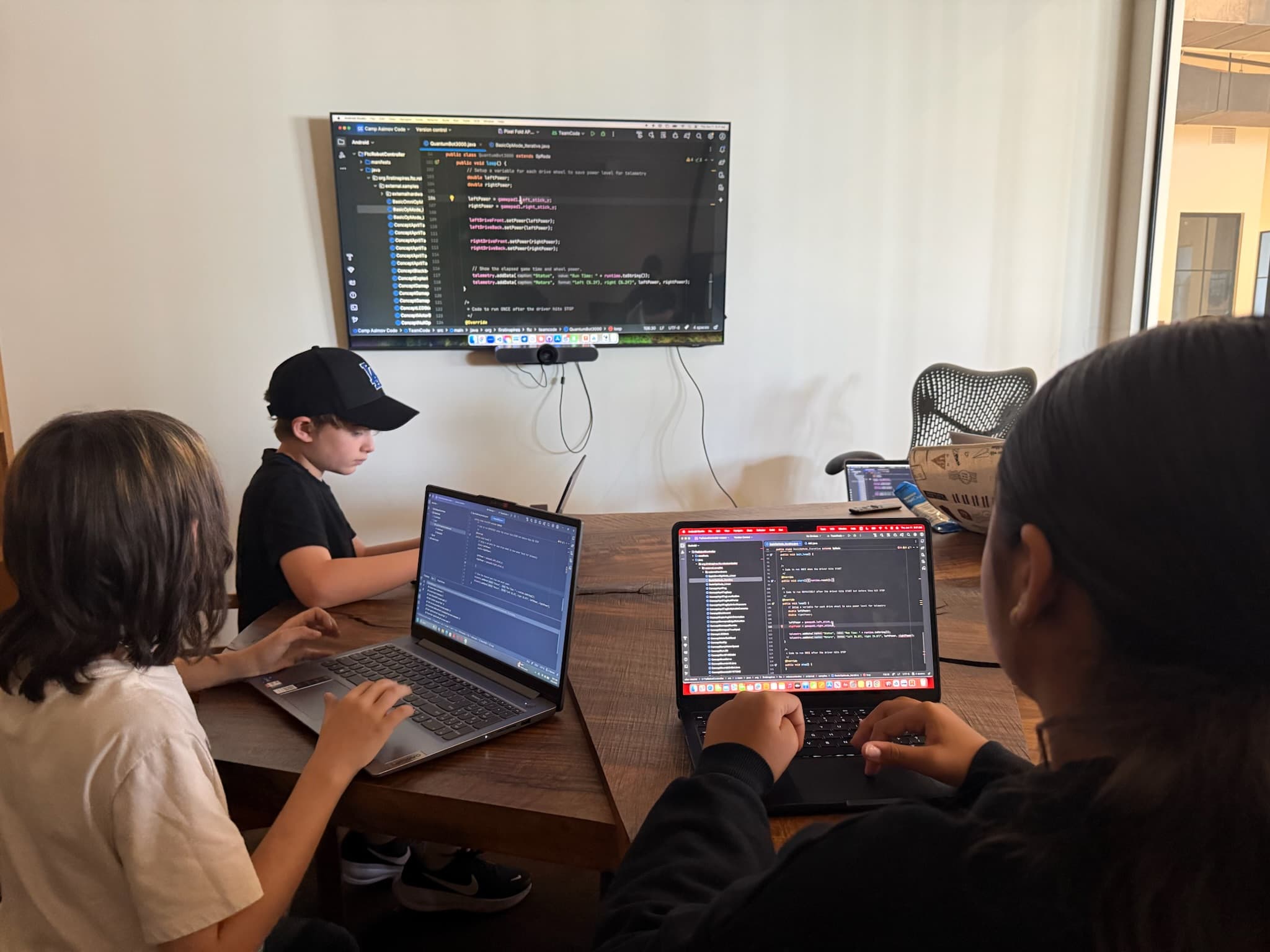
  • Java, an industry-standard programming language used in competitive robotics, with REV Control Hub
  • Encoders and driver controls so the robot can move precisely
  • Sensors (distance/vision) so the robot can detect and react
  • Intro to autonomous routines (robot actions that run without driver input)
Outcomes
  • Reliable robot systems that work together
  • Functional driver-control and autonomous code modes
  • Sensor-based control working reliably on the robot
  • First mini-autonomous routines

Week 3: Test, Iterate, Compete

Students stress-test their builds, identify failures, and improve step by step, ending with a Family Scrimmage Showcase.

Focus Areas
  • Reliability testing & failure analysis
  • Iteration journals and responsibility for key robot systems
  • Strategy refinement & driver practice
  • Presentation & storytelling
Outcomes
  • Reliable competition systems
  • Clear documentation of changes
  • Real scrimmage match experience
  • Polished final presentation

By the End of the Program, Students Will Be Able To:

  • Design simple robot parts and assemblies in CAD (3D design software)
  • Assemble a drivetrain and other key moving systems of a robot
  • Wire motors, servos, and core electronics
  • Write and test basic robot code in Java (an industry-standard language used by many robotics teams)
  • Troubleshoot mechanical and electrical issues
  • Improve robot designs through testing and redesign

Daily Rhythm

9:00

Morning briefing & safety checks

Day objectives, tooling checks, and lab readiness before build starts.

9:20

Build block (mechanical / coding / testing)

Focused work on key robot systems with coach-guided checkpoints.

11:00

Coach check-ins & feedback loops

Review debugging decisions, track progress, and improve build quality.

12:00

Lunch & recharge

Reset for the afternoon block and review next priorities.

12:30

Afternoon build block (key robot systems + testing improvements)

Integrate hardware and software, test quickly, and improve through repeated testing.

3:30

End-of-day demos & iteration planning

Show outcomes, capture learnings, and define next-step build goals.

Camp Asimov days are intentionally structured for sustained focus and steady progress, with natural breaks built into the rhythm and short, fun team games that keep energy high. Students still collaborate and support one another, but engineering responsibility stays personal so each student builds mechanical confidence and real troubleshooting ability.

Skill Progression (not age-based)

Students are placed by capability and readiness for technical work. Advancement is earned through consistent, high-quality build and testing work, not age.

Level 3: Competitive Leadership

Advanced build strategy, autonomous routines, test-based improvement, leadership on key robot systems, and mentoring peers.

Level 2: Intermediate Integration

CAD (3D design) to build to wiring to code to sensors to testing. Students take responsibility for major robot systems and contribute to match strategy.

Level 1: Foundations

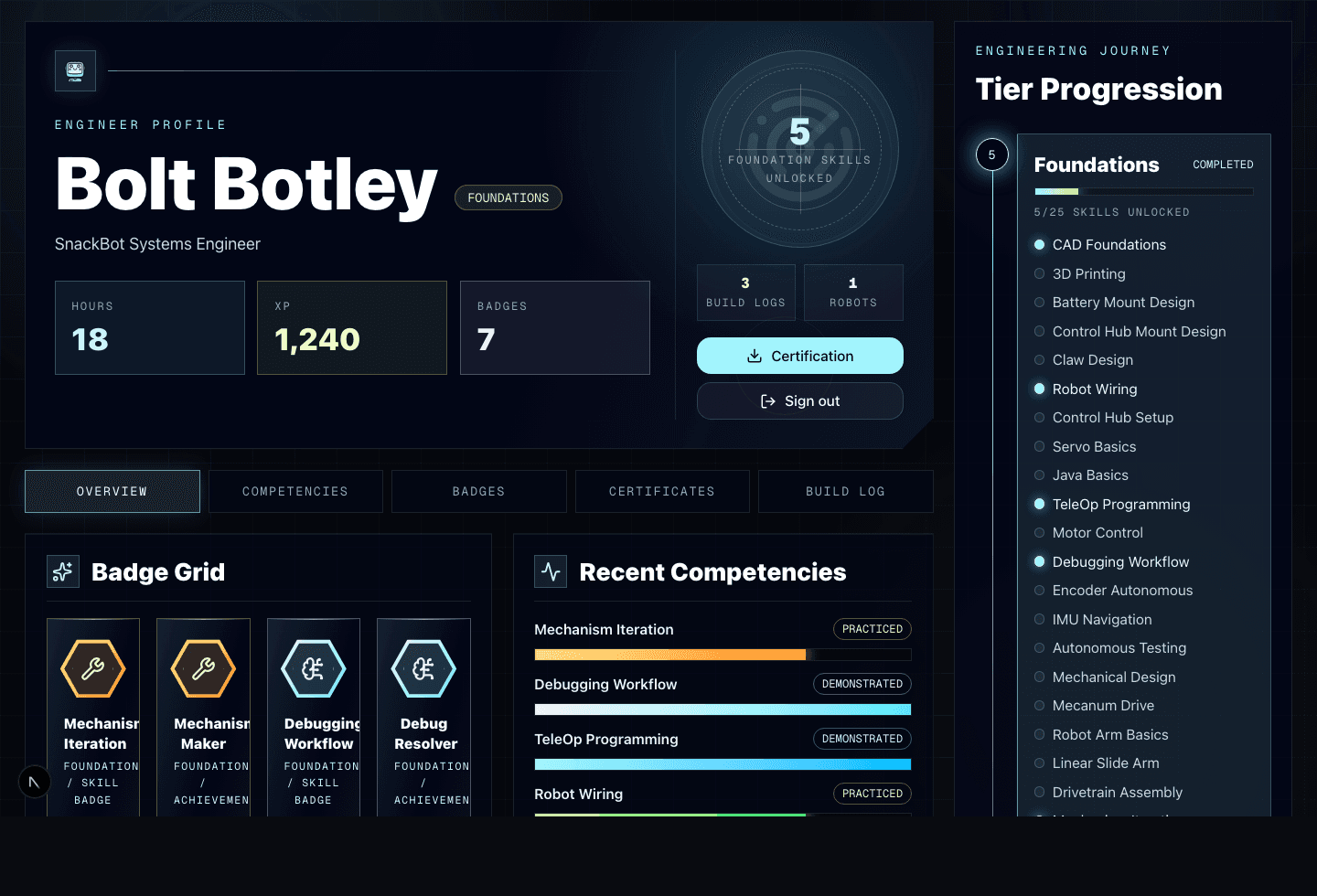
Tool safety, CAD basics, programming fundamentals, mechanical principles, fast prototyping, and a strong improvement mindset.

Age groupings are for social fit, skills determine challenge level.

Tuition & Dates

3-week program • Mon-Fri 9:00-4:00
Tuition
$1,200 / week
3-week program • $3,600 total
Two 3-week founding cohorts (June & July)
Capped at 16 students per cohort
Every student builds, tests, and improves their own robot.
Select a cohort and press Enroll Now to open the founding cohort interest form.
Limited seats by design. Cohorts are capped at 16 to preserve high mentor access and build quality.
Dates
June 8-26 • July 6-24
Location
2341 Michigan Ave
Santa Monica, CA 90404
Summer 2026 Sessions
  • June 8 - June 26: Cohort A
  • July 6 - July 24: Cohort B
  • Each session is limited to 16 students.
Refund policy available here: View refund policy
Ages
10–15
  • Grouped by age/experience
  • 1:8 Teacher : Student ratio
  • High-intensity, mentor-heavy build days
Who This Program Is For
This program is a strong fit for:
  • Beginners ready for a serious introduction to robotics engineering.
  • Robotics students who want stronger skills in CAD, wiring, and programming.
  • Students who enjoy building, troubleshooting, and improving systems.
  • Students who want to contribute more to their robotics teams.
Not a Fit For
  • Students looking for a casual summer camp.
  • Students not interested in building and troubleshooting robots.
  • Students seeking primarily game-based coding or Lego-style robotics.
What’s included
A focused program where each student builds and programs their own robot with professional tooling, structured coaching, and clear technical milestones.
  • Individual robot builds with direct mentor coaching (1:8 ratio)
  • Competition-grade parts used in FTC robotics: REV Robotics + goBilda builds
  • Autodesk Fusion 360 CAD (3D design software) + Java (an industry-standard robotics language)
  • Full lab access, safety training, and required PPE (protective equipment) included
  • Daily testing, improvement cycles, and Demo Day showcase
  • Portfolio photos/video + presentation coaching

Students typically work on their own laptops so they can keep their CAD environment and development tools configured for continued use after the program.

Laptop / Personal Device

Students are encouraged to bring their own laptop if possible. Working on a personal machine allows students to keep their CAD environment, files, and development tools set up exactly as they used them during the program.

This approach helps students continue developing their projects and skills after the program ends, rather than leaving their work behind on a shared computer.

If a student does not have access to a suitable laptop, please let us know in the enrollment form and we will work with you to ensure they can fully participate.