

Their own robot
Every student is responsible for one robot: design decisions, wiring, code, testing, failures, and improvements.
Robotics engineering summer program / Los Angeles
Camp Asimov is a robotics engineering program where every student builds their own robot, works with CAD, Java, sensors, and fabrication, and leaves with a growing Engineer Profile.
For students ages 10-17
Middle and high school students ready to build and troubleshoot robots.
Every student builds their own robot
Each camper owns the design, wiring, code, testing, and iteration.
12 students maximum
Small cohorts protect mentor access and build quality.
1:8 instruction target
Direct technical coaching during design, coding, and testing.
Santa Monica
A Los Angeles robotics program for students who want hands-on engineering work.
Engineering-first
Students use engineering tools and habits: CAD, electronics, Java, testing, iteration, documentation, and technical presentation.
Every student is responsible for one robot: design decisions, wiring, code, testing, failures, and improvements.
Robot systems, wiring, drivetrain behavior, mechanisms, and sensor feedback.
Students learn to prototype, fail, debug, revise, and explain what changed.
Progress is captured in a persistent Engineering Portal with competencies, badges, and build logs.
Student work
The work follows an engineering story: start with hardware, make a design choice, test it, revise it, and document what changed.
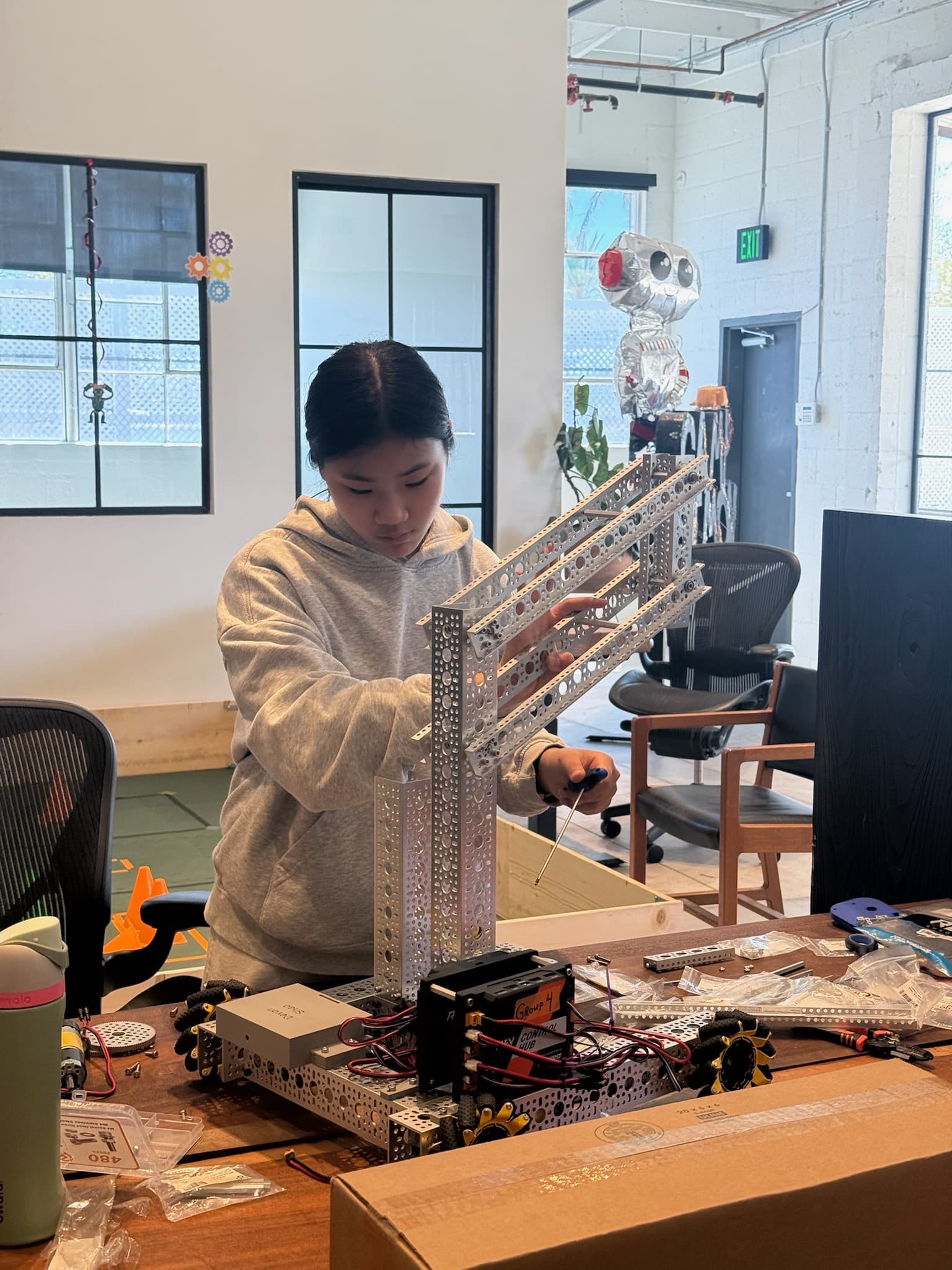
Start with the robot in front of you.
Start with the robot in front of you. - Students assemble structure, wiring, motors, and mechanisms before they talk about abstract engineering.
Campers are not watching a demo. They are handling parts, checking fit, tightening hardware, routing wires, and learning how their choices affect the machine.
Arms, claws, brackets, gears, and drivetrains give students something concrete to improve. The lesson is in the connection between design, force, motion, and reliability.
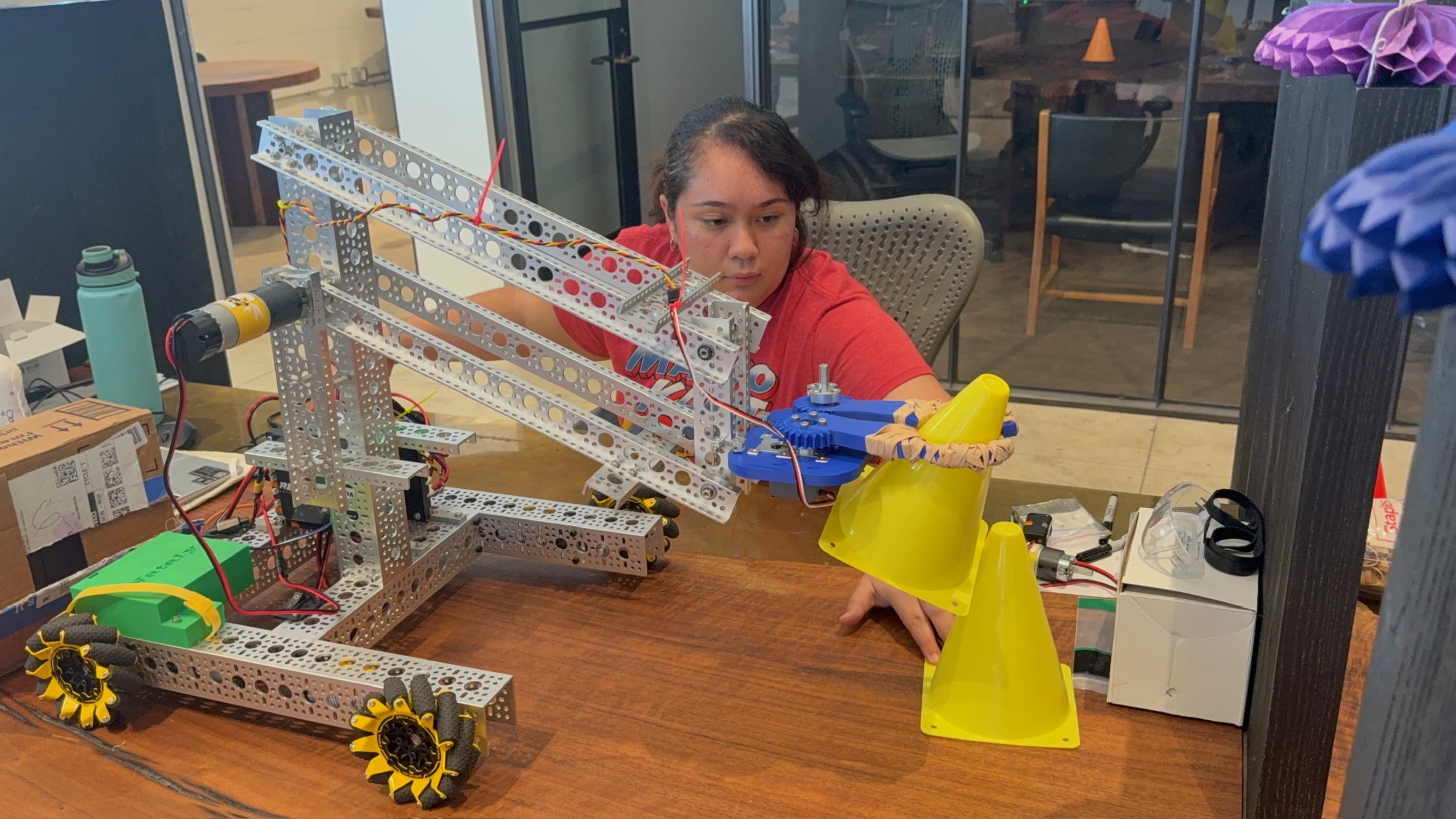
Build a mechanism that has to work.
Build a mechanism that has to work. - Students can point to the subsystem, explain what it should do, and see exactly where it needs revision.
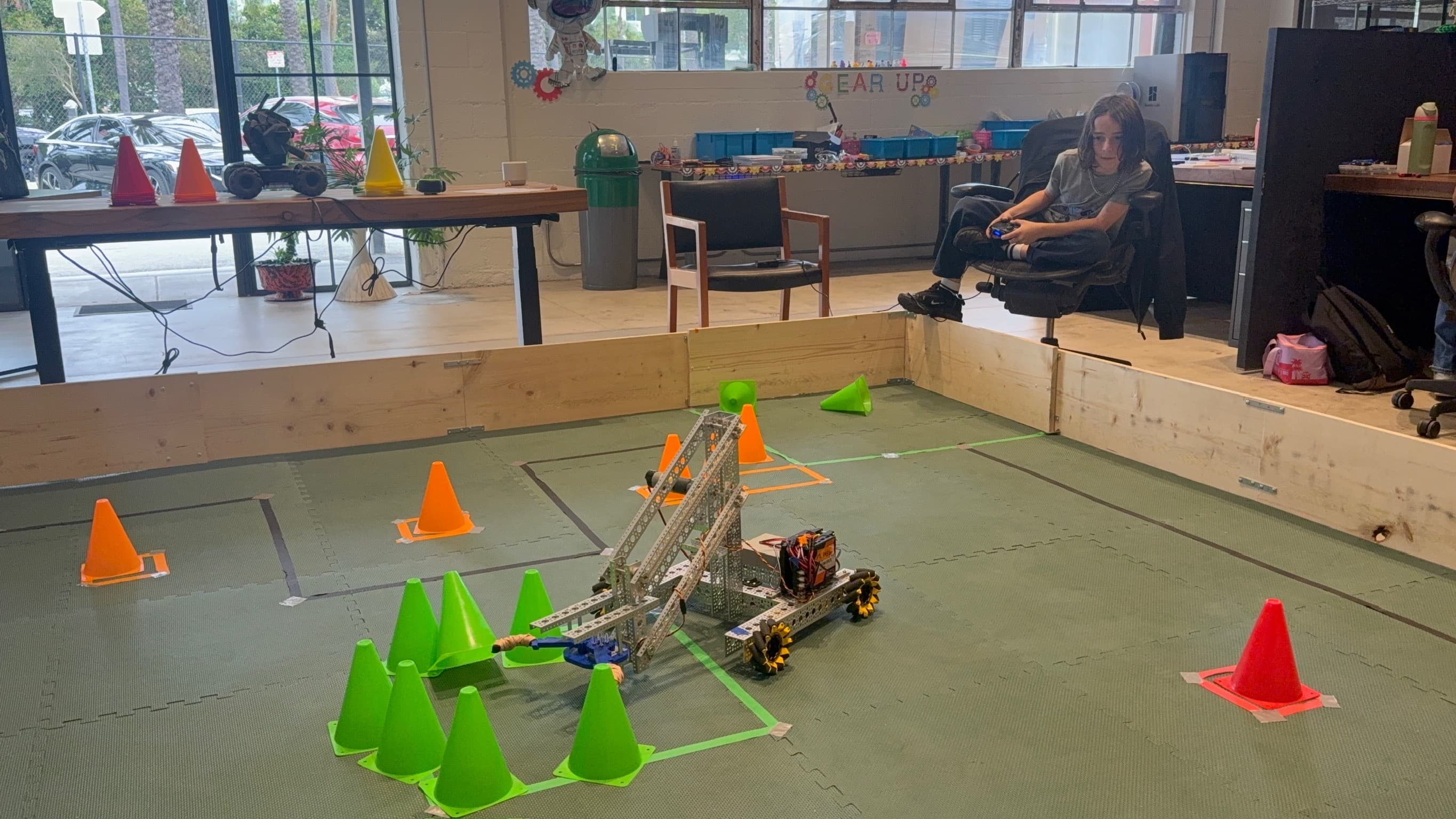
Test on the field, then revise.
Test on the field, then revise. - The robot’s behavior becomes evidence. Students see what worked, what failed, and what to change next.
Every run produces feedback: alignment, traction, wiring strain, mechanism timing, driver control, and code behavior. That feedback becomes the next build decision.
What students learn
Camp Asimov is designed for students who want more practice as builders, programmers, and problem solvers.
Fusion-style part design, assemblies, and revision habits.
Robot control logic, TeleOp structure, and autonomous routines.
3D printing, fit checks, iteration, and installed parts.
Color sensors, webcams, feedback loops, and testing.
Engineering Portal
Students receive a private Engineering Portal that tracks skills across Foundations, Intermediate, and Advanced levels, with badges, build logs, media evidence, certificates, and session history.
CAD, wiring, drivetrain assembly, Java basics, encoders, mechanical design.
Advanced Java, sensors, color detection, computer vision, PID, motion planning.
ROS, AI vision, SLAM, CNC, custom electronics, PCBs, and robotics research.
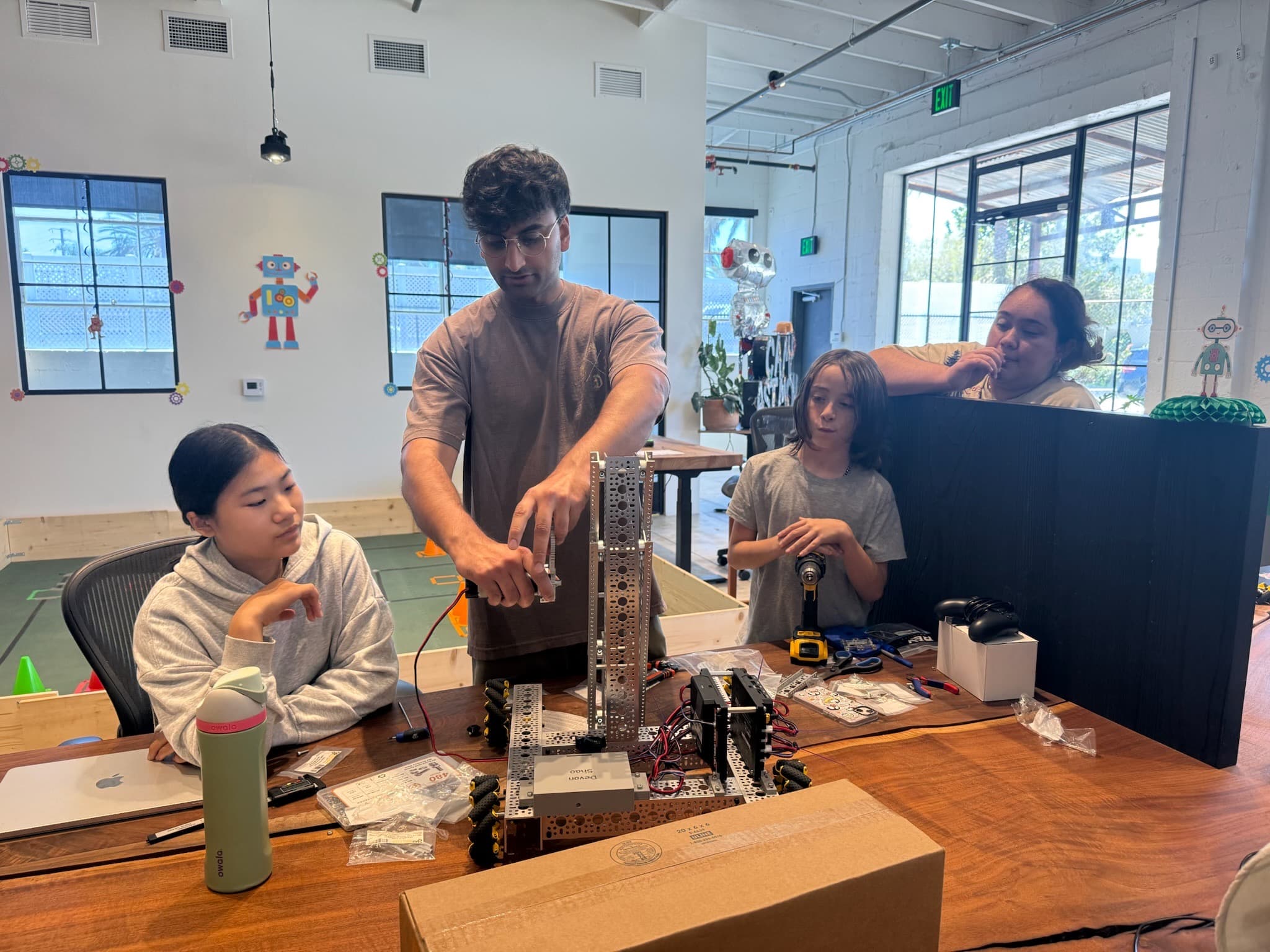
Direct mentorship from an experienced robotics educator.
Direct mentorship from an experienced robotics educator. - Campers get technical coaching from someone who understands teams, tools, and student growth.
Expert instruction
Ronit Kumar founded Brentwood School's robotics program and now coaches competitive robotics teams at Crossroads School for Arts & Sciences.
He has spent more than a decade teaching engineering fundamentals to students who went on to study and work in technical fields.
Former student reflections
Former robotics students describe what stayed with them from engineering coaching: problem solving, resilience, confidence, and technical curiosity.
“Robotics taught me a way of thinking that I have carried throughout my life, especially in my chemical engineering research. It gave me a strong foundation in problem solving, debugging, teamwork, and approaching open-ended challenges without getting discouraged. One of the things that stood out most about Ronit as a mentor was how much he encouraged curiosity and independent thinking.”
“The skills and lessons I learned in robotics have stayed with me throughout my education and professional career. Robotics blends creativity, problem solving, programming, physics, and engineering, and it taught me to think critically about how abstract code interacts with the physical world.”
“Robotics played a foundational role in shaping how I think and solve problems. It taught me resilience, creativity, and how to break complex challenges into manageable pieces. The experience sparked a lasting passion for technology.”
Structured expectations, tool supervision, and small cohorts.
Parents can see skills, evidence, certificates, and build history.
Summer 2027 / Enrollment is open
Two three-week robotics engineering sessions in Santa Monica, Monday through Friday.
June 21–July 9, 2027
3 weeks · Monday–Friday
Camp will run on Monday, July 5.
July 12–July 30, 2027
3 weeks · Monday–Friday
Tuition is $3,600 per student for one full session. After acceptance, a $1,200 deposit is credited toward tuition, leaving $2,400 before any separately approved aid or credits. Financial aid is available.
Applications are reviewed before a deposit invitation is sent. Session confirmation and cancellation conditions apply; see our refund policy.
FAQ
Yes, if they are ready for a focused build environment. Students are assessed early and supported at the right level.
No. Code is part of the work, but students also build mechanical systems, wire electronics, fabricate parts, test, and document.
Every student builds a persistent engineering record, not just a week of activities. The goal is to help students see and explain their own technical progress.
Robotics needs feedback. Small cohorts let students get direct coaching while still learning to solve problems independently.
Summer 2027 enrollment
Apply for one of two three-week sessions. We’ll review your application and contact you with next steps.
Tuition is $3,600 for the full three-week program. Financial aid is available.